Tudor Black Bay 58: Why This 39mm Diver Is So Special
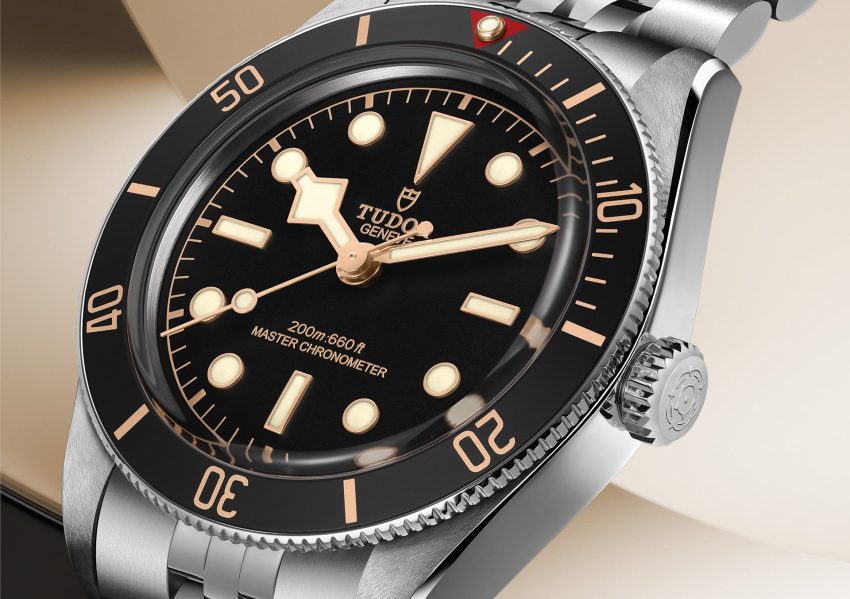
Some watches get famous because they are rare. The Tudor Black Bay 58 got famous for the opposite reason: it was the watch lots of people actually bought, wore every day, and kept recommending to friends. When it arrived in 2018 it fixed the one complaint people had about Tudor’s divers (too big) and it did it with a story that goes back to French Navy divers in the 1950s. In 2026 Tudor gave it its biggest update yet. Let’s look at why this 39mm diver, today’s reference M7939A1A0NU, became the watch so many enthusiasts point to when someone asks, “What should my first proper watch be?”
Why the Tudor Black Bay 58 Is Special
If you only read one section, make it this one. Three things set the Black Bay 58 apart:
- The size is right for most wrists. At 39mm across and now 11.7mm thick, it wears like a classic 1950s dive watch, not a modern hockey puck. That one decision is a big part of why it caught on.
- It has real dive-watch history behind it. The name points to 1958, the year Tudor dates its 200-meter “Big Crown” reference 7924, a watch developed after testing with the French Navy.
- The current version is a Master Chronometer. Since the update, the movement is tested by COSC and then certified by METAS, which checks accuracy, power reserve and resistance to magnetic fields up to 15,000 gauss.
From Navy Divers to “Big Crown”: Where the 58 Comes From
To understand the Black Bay 58 you have to go back to Tudor’s beginnings. Hans Wilsdorf, the founder of Rolex, had the Tudor name registered for him in 1926. His goal was simple: a reliable watch that his agents could sell for less than a Rolex. In 1946 he set up Montres Tudor S.A. as its own company, and for years Rolex stood behind Tudor’s quality and after-sales service.
Tudor’s first diver, the Oyster Prince Submariner, came in 1954. Then the French Navy got involved. In early 1956, the Navy’s underwater research group in Toulon (known as G.E.R.S.) received Tudor references 7922 and 7923 to test. Both were rated to 100 meters, and the group’s commander reported that their water resistance was perfect.
That good report led to an order for watches that could go deeper, to 200 meters. Tudor’s answer was reference 7924, which collectors call the “Big Crown” because of its oversized winding crown. Tudor dates it to 1958, and it is still the brand’s most iconic diving watch. A year later, reference 7928 added crown guards and became a regular tool for French Navy divers.
One more piece of the puzzle came in 1969. Reference 7016 introduced square hour markers and angular hands with bigger luminous areas, so they glowed longer underwater. Collectors nicknamed them “Snowflake” hands, and that hour hand is still on every Black Bay today. By 1974 these watches were being engraved “TUDOR M.N.” for the Marine Nationale.
2018: The Black Bay That Finally Fit
Tudor’s modern Black Bay line borrowed all that history, but the main model measured 41mm and was over 14mm thick. Plenty of people loved the look and found it too chunky. In 2018 Tudor answered them with the Black Bay Fifty-Eight, reference 79030N, named after the 7924 of 1958.
It was 39mm wide and 11.9mm thick, with narrower lugs, a slimmer rivet-style bracelet, a matte black dial with gilt (gold-tone) details, and a red triangle at the top of the bezel. Inside was Tudor’s in-house Calibre MT5402, a smaller movement built for this case, with a 70-hour power reserve, a silicon hairspring and COSC certification. At launch it cost US$3,250 on a strap and US$3,575 on the bracelet.
That combination of size, history and price made it a quick favourite with enthusiasts. A navy blue version, reference 79030B, joined later, and Tudor eventually built the 58 in bronze, sterling silver and 18k gold too.
Above: the original 2018 Black Bay 58, reference 79030N. Look for the three lines of text on the dial, the diamond-tipped seconds hand and the rivet-style bracelet.
2025–2026: The Master Chronometer Update
At Watches & Wonders 2025 Tudor showed a new Black Bay 58 with a burgundy dial and bezel. It brought a new movement, a new five-link bracelet and Master Chronometer certification. Many fans hoped the same upgrade would come to the classic black and gold. In April 2026 they got it: the black-gilt M7939A1A0NU.
From a few feet away it looks like the 58 you know. Up close, almost everything has been reworked:
- Thinner case. 11.7mm instead of 11.9mm, with slimmer-looking sides and a domed sapphire crystal.
- Cleaner dial. The text drops from three lines to two, and “Master Chronometer” replaces the old chronometer wording.
- New hands. The Snowflake hour hand stays, but the seconds hand is now a “lollipop” design with a counterweight, a nod to early Tudor divers.
- New crown and bezel. The crown is smaller and sits flush with the case, and the bezel edge has sharper grip.
- Three bracelet choices. A new five-link steel bracelet, the familiar three-link rivet bracelet, or a black rubber strap. All use Tudor’s “T-fit” clasp, which lets you adjust the length by up to 8mm without tools.
What “Master Chronometer” Means on Your Wrist
The new watch runs on Calibre MT5400-U, a manufacture calibre made by Kenissi. Every movement is first tested by COSC, the Swiss chronometer testing office. Then the finished watch goes to METAS, the Swiss federal institute of metrology, for Master Chronometer certification.
In everyday terms, that means three things. The watch has to keep time within 0 to +5 seconds a day. It has to keep running accurately after exposure to a 15,000-gauss magnetic field, far stronger than anything your phone, laptop or bag clasp will throw at it. And its 65-hour power reserve is certified too, so it will still be ticking if you take it off on Friday evening and pick it up on Monday morning.
One honest trade-off: the old MT5402 had a 70-hour reserve, so the new watch gives up five hours on paper. In return you get the magnetism resistance and the stricter accuracy check, which most owners will notice more in daily life.
The Black Bay 58 Family Today
The original 79030N and the blue 79030B are no longer in Tudor’s catalogue, so you will find them on the pre-owned market. Here is what the current Black Bay 58 range on Tudor’s site looks like:
- M7939A1A0NU (black-gilt): the classic look, on five-link, three-link or rubber. This is the one this post is about.
- M7939A1A0RU (burgundy): the 2025 model that introduced the update.
- M7939G1A0NRU (GMT): a 39mm travel watch with a black and burgundy bezel.
- Precious-metal and bronze versions: M79012M in bronze, M79010SG in 925 silver, and M79018V in 18k yellow gold.
Who Is It For?
The Black Bay 58 is a great choice if you want one mechanical watch that does almost everything. It is water resistant to 200 meters, handsome with a T-shirt or a jacket, and small enough for wrists that drown in a 41mm diver. Tudor’s own launch posts showed it on David Beckham, but it looks just as at home on someone who mostly dives into spreadsheets.
It is not perfect for everyone. If you love the original’s slightly chunkier, more vintage feel, a used 79030N may suit you better and cost less. The gilt details lean warm and vintage, so if you prefer a crisp, modern white-on-black look, try one on first. And this is a watch to wear, not a bet on future prices. We explain why we’re careful with that idea in our luxury watch investment guide.
If you are new to divers and other watch styles, our guide to the main types of watches is a good place to start. If you already own an automatic, our mechanical watch care guide covers how to keep one running well. And for a very different take on everyday luxury, read last week’s deep-dive on the Grand Seiko Snowflake SBGA211.
Tudor Black Bay 58 M7939A1A0NU Tech Specs
| Reference | M7939A1A0NU-0001 (five-link bracelet); -0002 (three-link rivet bracelet); -0003 (rubber strap) |
| Case material | Stainless steel, polished and satin finishes |
| Diameter | 39 mm |
| Thickness | 11.7 mm |
| Lug width | 20 mm |
| Bezel | Unidirectional rotating, steel with black anodised aluminium insert |
| Dial | Matte black, domed, applied hour markers, gilt details |
| Crystal | Domed sapphire |
| Crown | Screw-down, steel, Tudor rose in relief |
| Water resistance | 200 m (660 ft) |
| Movement | Manufacture Calibre MT5400-U, self-winding, bidirectional rotor |
| Frequency | 28,800 vph (4 Hz) |
| Power reserve | 65 hours |
| Functions | Hours, minutes, seconds |
| Certification | COSC and METAS (Master Chronometer) |
| Magnetic resistance | 15,000 gauss |
| Bracelet / clasp | Five-link or three-link steel bracelet, or rubber strap; “T-fit” clasp with tool-free adjustment |
| Warranty | Five years |
| Price | US$5,350 (five-link), US$5,225 (three-link), US$4,975 (rubber) on Tudor’s US website, October 2026. Swiss prices at launch (April 2026): CHF 4,350 / 4,250 / 4,050. |
Frequently Asked Questions
Why is it called the Black Bay 58?
The “58” refers to 1958, the year Tudor dates its reference 7924 “Big Crown,” its first diver rated to 200 meters. The Black Bay 58 borrows that watch’s spirit and size.
What is the difference between the 79030N and the M7939A1A0NU?
The 2018 79030N uses Calibre MT5402 (COSC, 70 hours) and is 11.9mm thick, with three lines of dial text and a diamond-tipped seconds hand. The 2026 M7939A1A0NU uses Calibre MT5400-U (COSC plus METAS Master Chronometer, 65 hours, 15,000 gauss), is 11.7mm thick, and adds a two-line dial, a lollipop seconds hand, a new crown and bezel, and the T-fit clasp.
Is the Tudor Black Bay 58 good for small wrists?
Yes, that is the reason it exists. At 39mm wide, 11.7mm thick and with 20mm lugs, it was designed for people who found Tudor’s 41mm Black Bay too large. As always, try one on if you can.
Do you own a Black Bay 58, old or new? Tell us in the comments whether you’d pick the five-link bracelet or the classic rivets.
Featured image: Tudor Black Bay 58 M7939A1A0NU-0001, courtesy of TUDOR. Instagram photos are embedded from their owners’ accounts.



Leave a Reply