Grand Seiko Snowflake SBGA211: Why This Watch Is So Special
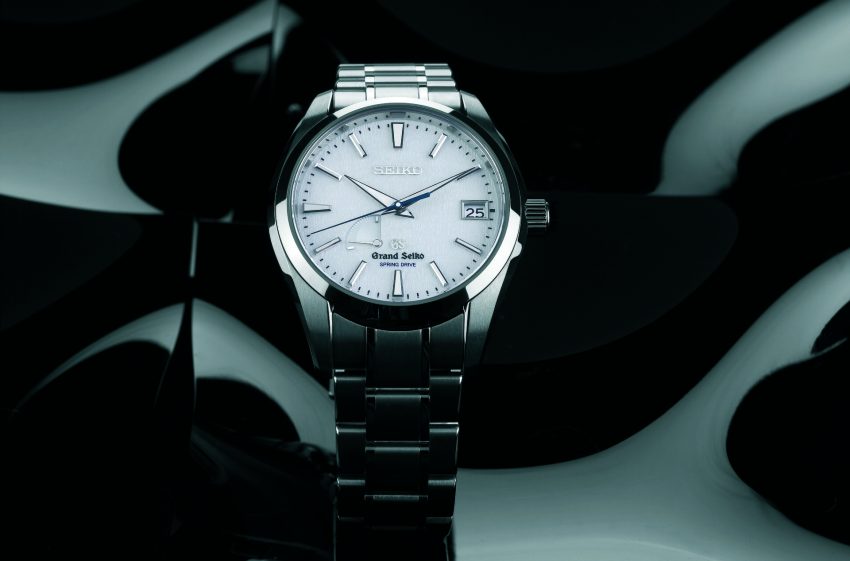
Some watches are special because they are rare. Some are special because a celebrity wore them. The Grand Seiko Snowflake is special for a simpler reason: almost everyone who sees one in person stops and looks twice. It has a white dial that isn’t really white, a seconds hand that doesn’t tick, and a story that starts with one engineer’s idea in 1977. Let’s look at why this watch, reference SBGA211, became the watch most people picture when they hear “Grand Seiko.”
Why the Snowflake Is Special
If you only read one section, read this one. Three things make the Snowflake stand out, and none of them is the logo:
- The dial. It copies the texture of wind-carved snow in the mountains near the studio where the watch is built. It changes with every angle and every light.
- The glide. Thanks to the Spring Drive movement, the blue seconds hand sweeps in one continuous motion. There is no tick at all, not even the fast stutter of a high-beat mechanical watch.
- The weight. The case and bracelet are made of titanium, so a 41mm watch with a full bracelet weighs about 100 grams. On the wrist it feels smaller and lighter than it looks.
A Dial Made from Snow and Wind
Grand Seiko’s Spring Drive watches are made at the Shinshu Watch Studio in Shiojiri, in Japan’s Nagano Prefecture. From the studio you can see the Hotaka mountains, which stay covered in snow for months every winter. Strong winds blow across that snow and carve fine ridges and waves into its surface.
In 2004 the dial makers at Shinshu got an unusual brief: make a dial that captures the nature around the place where Spring Drive is born. The answer was this pattern. It isn’t printed and it isn’t painted white. The texture is pressed into the dial, and then a special silver-plating process gives it that bright, snowy look. Up close it looks like fresh snow after a windy night. From a distance it looks like brushed white silk.
The hands and hour markers are faceted and polished, so they catch light against the textured background. The only color on the dial is the blue tempered-steel seconds hand. That small accent is what makes the glide so easy to notice.
The Story Behind Spring Drive
To understand the Snowflake you have to know the engine inside it, and the man behind that engine.
In 1977, Yoshikazu Akahane was a young engineer at Suwa Seikosha, the Seiko company that later became part of Epson. He had a dream he called the “everlasting watch”: a watch powered only by a mainspring, like a classic mechanical watch, but accurate to about one second a day, like a quartz watch. He filed a patent for the idea in 1978.
Making it real was much harder. The first prototype in 1982 ran for only about four hours, far from the two days the team wanted. The electronics of the time used too much power. The project was paused, restarted and paused again. In total, the team built around 600 prototypes before it worked.
Spring Drive was shown to the world at Baselworld in 1999, and the first watches went on sale that year in very small numbers. Akahane never saw it. He died in 1999 at the age of 52, just before the launch, after more than twenty years of work on the idea. Grand Seiko’s first Spring Drive, the SBGA001, followed in September 2004. That watch used Caliber 9R65, the same movement still inside the Snowflake today.
How Spring Drive Works (Without the Headache)
A normal mechanical watch stores energy in a mainspring and releases it through an escapement. The balance wheel swings back and forth, and every swing lets the gears move a tiny step forward. That is the “tick.”
Spring Drive keeps the mainspring and the gear train but removes the escapement completely. At the end of the gear train there is a small spinning wheel called the glide wheel. As it turns, it generates a very small amount of electricity. That electricity powers a quartz crystal and a tiny circuit. The circuit compares the glide wheel’s speed with the quartz reference and applies a gentle magnetic brake to keep it at exactly the right speed. Seiko calls this system the Tri-synchro Regulator.
The result: no battery, no ticking, and an official accuracy of ±15 seconds per month, which works out to about ±1 second per day. For comparison, an officially certified (COSC) mechanical chronometer is allowed to drift between −4 and +6 seconds per day.
From SBGA011 to SBGA211
The first Snowflake was the SBGA011, released in Japan in 2005. At that time Grand Seiko was still a line inside Seiko, so the dial said “SEIKO” at 12 o’clock and “Grand Seiko” at 6 o’clock. Collectors outside Japan mostly had to import one. That changed in 2010, when Grand Seiko started selling its watches internationally.
In 2017 Grand Seiko became an independent brand, and the Snowflake was updated to the SBGA211. The watch is almost identical. The big change is on the dial: the Seiko name is gone, and “GS Grand Seiko” now sits alone at 12 o’clock. Because it was the only Snowflake to carry both names, the old SBGA011 has become a small collector’s item of its own.
The Snowflake also started a whole family of nature-inspired dials. The most famous sibling is the SBGA407 “Blue Snowflake,” which uses the same texture in a soft powder blue.
The Case: Light Titanium and Mirror Polish
Grand Seiko uses what it calls High-Intensity Titanium. According to the brand, it is around 30% lighter than stainless steel and harder to scratch. Titanium is usually matte and gray, but Grand Seiko gives this case its famous Zaratsu polish, a hand-finishing technique that creates flat, distortion-free mirror surfaces next to brushed areas. So you get the brightness of a polished steel watch at a fraction of the weight.
The case shape was designed together with the 9R65 movement. It tapers toward the back, which helps a 41mm watch sit low and wear comfortably on smaller wrists.
Who Is It For?
The Snowflake is a great “one watch” choice. It is dressy enough for a suit, tough enough for daily wear, and water resistant to 100 meters. The 3-day power reserve means you can take it off on Friday and it is still running on Monday.
It is not for everyone, though. If you love the sound and soul of a purely mechanical escapement, Spring Drive may feel too “perfect.” It is also 12.5mm thick, which is fine but not slim. And it is not an investment piece like the hype watches we covered in our luxury watch investment guide. You buy a Snowflake because you want to wear it, not to flip it.
Not sure where Spring Drive fits among other movement types? Our guide to watch types explains the basics, and our mechanical watch care tips apply to a Spring Drive too.
Grand Seiko Snowflake SBGA211 Tech Specs
| Reference | SBGA211 (Heritage Collection) |
| Case material | High-Intensity Titanium, Zaratsu polished |
| Diameter | 41.0 mm |
| Lug-to-lug | 49.0 mm |
| Thickness | 12.5 mm |
| Lug width | 20 mm |
| Weight | approx. 100 g |
| Crystal | Dual-curved sapphire, anti-reflective coating on inner surface |
| Caseback | Screw-down, sapphire display back |
| Crown | Screw-down |
| Dial | Silver-plated “Snowflake” texture, blue tempered-steel seconds hand |
| Movement | Caliber 9R65, Spring Drive, automatic with manual winding |
| Jewels | 30 |
| Accuracy | ±15 seconds per month (about ±1 second per day) |
| Power reserve | approx. 72 hours, with indicator on the dial |
| Functions | Hours, minutes, seconds, date, power reserve indicator |
| Water resistance | 10 bar (100 m) |
| Magnetic resistance | 4,800 A/m |
| Bracelet | Titanium, folding clasp with push-button release |
| Predecessor | SBGA011 (Japan 2005) |
| Price | USD 6,900 (Grand Seiko US, October 2026) |
Frequently Asked Questions
Is the Grand Seiko Snowflake a quartz watch?
No. It has no battery and is powered by a mainspring wound by your wrist movement or the crown. A quartz crystal is used only to regulate speed, and it runs on electricity the movement generates itself.
Why is it called the Snowflake?
The nickname comes from the dial texture, which recreates wind-swept snow on the Hotaka mountains seen from Grand Seiko’s Shinshu Watch Studio.
What is the difference between the SBGA011 and the SBGA211?
Mainly the dial branding. The SBGA011 (2005) shows the Seiko logo at 12 and Grand Seiko at 6. The SBGA211 (2017) shows only the GS Grand Seiko logo at 12. The case, dial texture and Caliber 9R65 are essentially the same.
Have you seen a Snowflake in person? Tell us in the comments whether the dial lives up to the photos.
Featured image: Grand Seiko SBGA011 “Snowflake” by Faustine seiko, via Wikimedia Commons, licensed CC BY-SA 3.0. Instagram photos are embedded from their owners’ accounts.


Leave a Reply